Takeaways
- Promptly contact your insurer and gather detailed damage documentation for glazing claims in Barking and Dagenham.
- Review your policy for coverage limits, exclusions, and covered perils related to glazing damages.
- Provide clear photos, repair estimates, and incident reports to support your claim submission.
- Insurers assess damage cause, severity, and policy alignment before approving glazing claims.
- Follow up regularly and keep records to ensure smooth processing of your glazing insurance claim.
What Are Insurance Glazing Claims and How Do They Work?
Insurance glazing claims refer to the process by which property owners seek reimbursement or coverage from their insurance providers for damages or losses related to glass components, such as windows, doors, or skylights. When initiating a claim, you must review your insurance policies to understand coverage limits, exclusions, and the specific process for filing. Typically, the claim involves documenting the damage and submitting evidence, such as photographs or repair estimates. The insurer then assesses the claim’s validity and determines the extent of coverage for glass repair or replacement. It’s crucial to follow procedural requirements closely to guarantee a smooth process. Properly understanding how insurance policies address glazing damage helps you navigate the claim efficiently and secure appropriate compensation for repairs.
How Can You Tell If Your Glass Damage Qualifies for a Claim?
To determine if your glass damage qualifies for a claim, you should first assess visible damage indicators such as cracks or chips. Consider the impact and cause of the damage, as some incidents may be covered while others are not, based on your policy details. Reviewing your coverage specifics will help clarify whether the damage meets the criteria for a successful claim submission.
Visible Damage Indicators
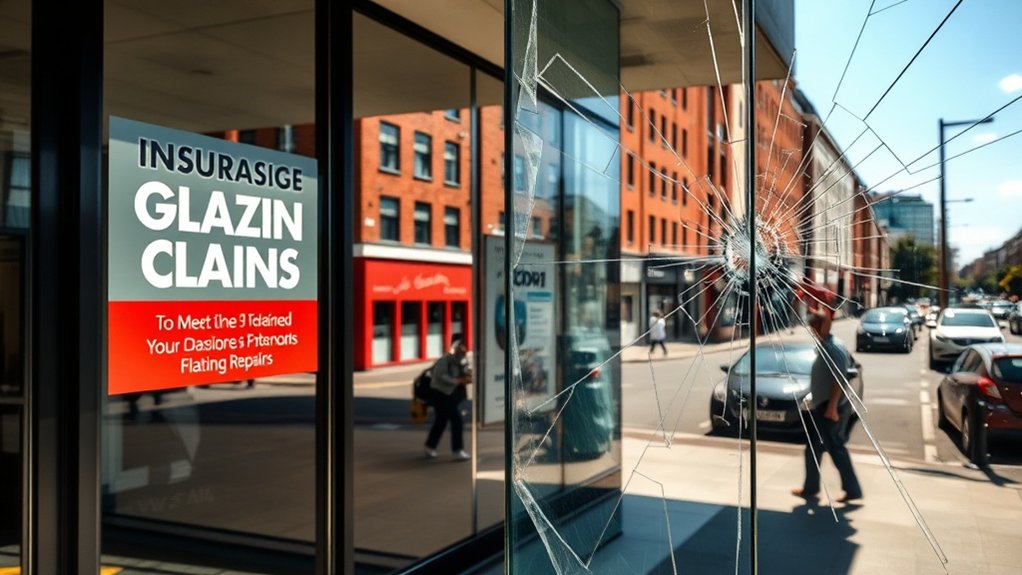
Visible damage indicators are often the most straightforward signs that your glass may qualify for a claim. Notable glass breakage signs include visible cracks, chips, or shattered areas that compromise the integrity of the pane. These signs are typically easy to identify and serve as primary proof of damage. Additionally, repair cost indicators can suggest the severity of the damage; if repairs are extensive or involve replacing entire panels, it’s likely that your claim will be valid. Pay close attention to spider-web cracks or sections where the glass appears to be compromised structurally. Documenting these visible damage indicators with photographs can strengthen your case when submitting a claim. Recognizing these signs early can help guarantee a smoother and more accurate claims process.
Impact and Cause
Understanding the impact and cause of glass damage is vital in determining whether your situation qualifies for a claim. Evaluating the risk involved, such as whether the damage resulted from accidental impact or environmental factors, helps establish eligibility. Damage caused by sudden events like collisions or vandalism typically qualifies, whereas gradual deterioration may not. Conducting a thorough risk evaluation enables you to distinguish between incidental damage and preventable issues. Proper damage prevention measures, like installing protective films or barriers, can mitigate future risks and support your claim, provided the damage aligns with covered causes. Recognizing the specific impact and its origin guarantees you accurately assess your claim’s validity and enhances the likelihood of a successful insurance process.
Policy Coverage Details
Determining whether your glass damage qualifies for an insurance claim hinges on carefully reviewing your policy’s coverage details. First, examine the policy exclusions; some damages, such as minor chips or cracks caused by neglect, may not be covered. Next, check the coverage limits, which specify the maximum payout for glazing damages. If the damage exceeds these limits, you may need to pay the difference out of pocket. It’s vital to understand whether your policy includes extensive coverage for accidental damage or if it’s limited to specific incidents like vandalism or storm-related harm. Being familiar with these details guarantees you accurately assess your eligibility for a claim and avoid surprises during the claims process. Always consult your policy documentation or speak with your insurer for clarification.
How to File an Insurance Glazing Claim in Barking and Dagenham
Filing an insurance glazing claim in Barking and Dagenham requires careful attention to specific procedures to guarantee a smooth process. Begin by promptly contacting your insurer to initiate the claim submission, providing detailed information about the incident. Conduct a thorough damage assessment, documenting the extent of the damage with photos and written descriptions. Make sure you gather all necessary documentation, such as receipts and maintenance records, to support your claim. Be prepared to cooperate with the insurer’s assessment process, which may involve an independent inspection. To streamline the process, consider keeping a record of all communications and correspondence related to your claim. This organized approach will facilitate a faster resolution and help make certain your claim is processed efficiently.
Tips for Making Your Claim Process Smooth and Fast
To expedite your insurance glazing claim, make sure you gather all necessary documentation, including photographs, repair estimates, and proof of ownership, before contacting your insurer. Promptly reaching out to your insurer helps prevent delays and provides clarity on required information. Being organized and proactive can greatly streamline the entire claims process.
Gather Necessary Documentation
Gathering the appropriate documentation is an essential step in guaranteeing a smooth and efficient insurance glazing claim process. Accurate claim documentation and the required evidence are crucial to substantiating your claim and avoiding delays. To streamline this process, make sure you have:
- Photographs of the damage, clearly showing affected areas
- A detailed repair estimate from a qualified glazier
- Proof of ownership or purchase, such as receipts or invoices
- A copy of the police report if vandalism or theft is involved
Having these documents ready helps establish the validity of your claim and expedites approval. Organize your evidence systematically to present a clear, thorough case. Proper preparation minimizes errors and accelerates the resolution of your glazing claim.
Contact Your Insurer Promptly
Promptly contacting your insurer after discovering glazing damage is essential to guaranteeing a swift and efficient claims process. Timely claim notification allows for accurate assessment and minimizes delays. When you initiate insurer communication, provide detailed information about the damage, including date, location, and cause. This proactive approach helps streamline the process and demonstrates your cooperation.
| Step | Action |
|---|---|
| 1 | Report damage immediately upon discovery |
| 2 | Gather all relevant documentation for claim |
| 3 | Clearly describe the incident and damage in your claim notification |
| 4 | Maintain open communication with your insurer |
| 5 | Follow up regularly to track claim progress |
Effective insurer communication guarantees your claim is processed promptly and accurately.
Common Problems in Glazing Claims and How to Fix Them
While glazing claims are generally straightforward, several common problems can complicate the process and hinder timely resolution. Common glazing issues, such as improperly documented damage or insufficient evidence, often lead to claim process challenges. These issues can delay assessment and approval, increasing frustration. To avoid these pitfalls, guarantee you provide detailed photographs, obtain accurate damage assessments, and keep thorough records of communications. Additionally, misunderstandings about policy coverage or exclusions may cause disputes. Addressing these problems early and consulting with specialists can help streamline your claim. Being proactive in documentation and understanding your policy limits are essential steps to minimize claim process challenges and guarantee a smoother resolution.
What Factors Influence Your Claim Approval Chances?
Several key factors can greatly influence the likelihood of your glazing claim being approved. During claim evaluation, insurers assess whether your situation meets specific approval criteria, such as the cause of damage, extent of loss, and policy coverage. Providing thorough, accurate documentation—like photographs, repair estimates, and incident reports—can strengthen your case. Insurers also scrutinize whether the damage resulted from covered perils or negligence, impacting approval chances. Additionally, consistent adherence to claim procedures and timely submission are essential. Any discrepancies or incomplete information may hinder approval. Ultimately, understanding the insurer’s claim evaluation process and ensuring your submission aligns with their approval criteria greatly improves your prospects of a successful claim.
Frequently Asked Questions
What Documents Are Needed to Support My Glazing Claim?
To support your glazing claim, you need to gather essential claim documentation, including photographs of the damage, a copy of your insurance policy, and a detailed incident report. Evidence collection is vital, so make sure you obtain repair estimates and any relevant receipts. Providing thorough documentation helps establish the extent of the damage and facilitates a smooth claims process, guaranteeing your claim is processed efficiently and accurately.
How Long Does the Entire Glazing Claim Process Typically Take?
Imagine a gentle stream flowing steadily—your claim timeline typically ranges from a few days to a few weeks, depending on processing delays. The duration hinges on the completeness of your documentation and the insurer’s efficiency. While most claims are resolved promptly, unforeseen delays can extend timelines. Staying proactive with your submissions and follow-ups helps facilitate a smoother process, ultimately guiding your claim towards a swift and satisfactory resolution.
Are There Specific Insurance Providers Preferred in Barking and Dagenham?
In Barking and Dagenham, there isn't a specific insurance provider that's universally preferred for glazing claims; however, local insurance companies often offer tailored coverage options suited to the area's needs. You should review policies from various providers to guarantee thorough coverage and prompt claims processing. It’s advisable to consult with local insurers directly, as they can provide detailed information on their coverage options and assist in selecting the most suitable policy for your glazing needs.
What Are Common Reasons Claims Get Denied in Glazing Cases?
Claims often get denied due to claim investigation pitfalls, such as insufficient evidence or misreported damages, which hinder validation. Additionally, policy coverage nuances—like exclusions for accidental damage or specific glass types—can limit claim approval. To avoid denial, guarantee thorough documentation of damages, understand your policy’s coverage nuances, and cooperate transparently during investigations. This proactive approach minimizes denial risks and facilitates smoother claim processing.
Can I Make a Glazing Claim for Minor or Cosmetic Damages?
You can generally claim for minor damages or cosmetic repairs, but insurers often see these as less urgent and may deny such claims if they consider them cosmetic or non-essential. It’s important to document the damage thoroughly and verify your policy’s coverage for minor or aesthetic issues. Keep in mind, sometimes a small crack can turn into a big problem, so it’s wise to address cosmetic damages promptly before they escalate.