
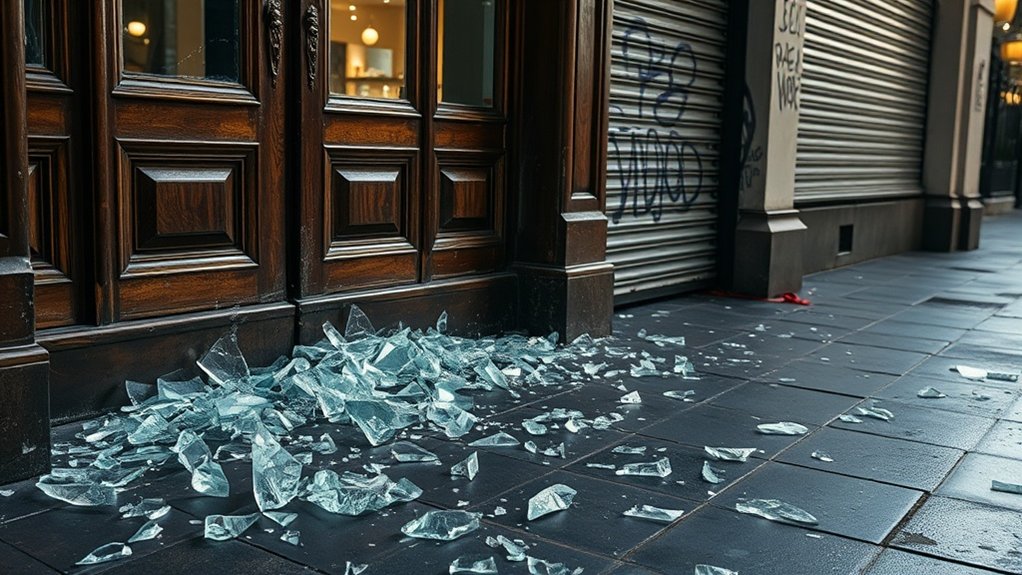
If your City of London property suffers burglary damage to glazing, it compromises both security and structural integrity, requiring immediate assessment for vulnerabilities. Recognizing signs like cracks or difficulty in opening windows helps prompt swift action. It’s crucial to document the damage, secure the site, and consult professionals for repair or replacement options, considering impact-resistant upgrades. Understanding your legal and insurance responsibilities guarantees proper handling. Continuing to explore effective security enhancements and legal obligations can greatly aid in safeguarding your property from future threats.
Takeaways
- Promptly assess and document glazing damage to ensure security and facilitate insurance claims.
- Identify signs of window damage, such as cracks or difficulty opening, indicating potential forced entry.
- Prioritize repair or replacement with impact-resistant glazing to restore security efficiently.
- Secure the affected area immediately to prevent further intrusion or injury.
- Review local legal responsibilities and upgrade security measures, including CCTV and reinforced windows.
How Can Burglary Damage Glazing Affect Your City of London Property?
When burglary damage occurs to glazing on your City of London property, it can greatly compromise both security and structural integrity. Such damage necessitates a thorough property assessment to identify vulnerabilities and prevent future breaches. The compromised glazing weakens the barrier against unauthorized entry, making your premises more susceptible to further intrusion. Implementing targeted security upgrades, such as reinforced or laminated glass, can considerably enhance protection. A detailed property assessment helps determine the extent of damage and the most effective remedial measures, ensuring that repairs do not just restore aesthetics but also bolster security. Addressing these issues promptly reduces risk exposure and maintains the integrity of your property’s security systems, safeguarding both assets and personnel from potential threats.
How to Recognize Signs of Window Damage From Break-Ins
You should regularly inspect your windows for visible cracks or chips, which often indicate forced entry or attempted break-in. Unusual window behavior, such as difficulty opening or unexpected movement, can also signal structural compromise. Recognizing these signs promptly allows for immediate assessment and necessary security measures.
Visible Glass Cracks
Visible glass cracks are among the most immediate indicators of forced entry through window break-ins. These cracks often appear as radial or concentric fractures, suggesting significant impact. Recognizing these signs promptly allows for timely glass repair, preventing further damage and enhancing security. Cracks can weaken window integrity, making it easier for intruders to gain access or cause additional damage. When cracks are detected, considering security upgrades—such as reinforced or laminated glazing—can deter future breaches. Analyzing crack patterns helps assess the force and method used in the break-in, guiding effective repairs and security improvements. Addressing visible glass cracks swiftly minimizes vulnerability, restores structural stability, and reinforces overall property security, deterring repeat offenses.
Unusual Window Behavior
Unusual window behavior often serves as an early warning sign of tampering or damage resulting from a break-in. You may notice unpredictable movements, such as sudden shifts or oscillations in the window’s position, which indicate compromised structural integrity. Changes in window alignment—like uneven gaps or misfitting panes—can signal internal damage or forced entry. These anomalies suggest that the window’s balance or locking mechanism has been disturbed, often due to impact or attempted breach. Monitoring these signs allows for prompt detection of break-in activity before further damage occurs. Recognizing irregularities in window operation and alignment is essential for maintaining security and initiating timely repairs, ultimately deterring future intrusion attempts.
What Immediate Steps Should You Take After Glazing Damage?
Immediately after glazing damage, your priority is to assess safety risks and prevent further injury or intrusion. Securing the broken area with temporary barriers minimizes security vulnerabilities and environmental hazards. Contacting professional glazing services guarantees proper repairs are carried out efficiently and uphold structural integrity.
Ensure Safety First
When glazing damage occurs, prioritizing safety is vital to prevent further injury or property loss. Immediate action should involve implementing established safety protocols, such as cordoning off the affected area to contain broken glass and prevent accidental contact. An effective emergency response plan requires evaluating potential hazards, including sharp edges or compromised structural integrity. Securing personal safety and that of others involves using appropriate protective gear and avoiding unnecessary exposure to broken glass or debris. It’s important to document the damage thoroughly for insurance and repair purposes. Quick, systematic response minimizes risks and facilitates swift restoration. Remember, safety protocols are designed to mitigate hazards efficiently, and a well-coordinated emergency response reduces liability and guarantees that the situation is contained safely before proceeding with repairs.
Secure Broken Area
To effectively secure the area after glazing damage, you should first establish a physical barrier around the affected zone to prevent unauthorized access and reduce the risk of injury from falling or sharp glass. Implement reinforced glass in any remaining or newly installed panels to enhance structural integrity and deter further intrusion. Confirm all entry points are fitted with secure locks that can withstand potential tampering or force. Temporary barriers, such as plywood or heavy-duty plastic sheeting, can provide immediate protection until permanent repairs are completed. Clear signage indicating restricted access should be prominently displayed. These measures collectively contain the damaged area, mitigate security risks, and facilitate a safe environment for subsequent repairs or investigations.
Contact Glazing Professionals
After securing the damaged area with barriers and signage, the next critical step is to contact professional glazing services. This guarantees a prompt, accurate assessment of the glazing damage and prevents further security risks. When engaging glazing services, consider the following steps:
- Verify the provider’s credentials and experience in burglary damage repairs.
- Request a detailed professional assessment to determine the extent of damage and necessary repairs.
- Confirm the availability of emergency glazing services for immediate mitigation.
- Obtain an itemized quote, including materials, labor, and estimated completion time.
How to Choose the Best Repair and Replacement Options
Selecting the most appropriate repair or replacement option for burglary-damaged glazing requires a thorough assessment of factors such as the extent of damage, security requirements, and cost-effectiveness. You should evaluate repair materials to determine whether they restore integrity or necessitate full replacement. For minor damage, high-strength adhesives or polycarbonate overlays may suffice, offering quick, cost-effective solutions. When damage is extensive or security is compromised, replacement options should prioritize durable, impact-resistant glazing—such as laminated or toughened glass—that meet security standards. Analyzing the long-term benefits and associated costs of each choice guarantees ideal protection and minimal disruption. Ultimately, your decision should balance immediate repair feasibility with the need for enhanced security to prevent future incidents.
How to Strengthen Security and Prevent Future Glazing Break-Ins
Implementing effective security measures is essential to prevent future glazing break-ins and assure the integrity of your property. Focus on strategic security upgrades and robust window reinforcement techniques. Consider these key actions:
- Install laminated or tempered glass to resist impact.
- Add security film to existing glazing for increased shatter resistance.
- Incorporate window locks or multi-point locking systems for enhanced security.
- Use window sensors or alarms that trigger alerts upon unauthorized entry.
These measures greatly reduce vulnerability by strengthening glass and locking mechanisms, deterring intruders. Proper security upgrades involve both physical reinforcement and electronic monitoring, creating layers of defense. Regular maintenance and assessment guarantee these systems remain effective, minimizing the risk of glazing break-ins and safeguarding your property’s security.
What Are Your Legal and Insurance Responsibilities After Damage?
Understanding your legal and insurance responsibilities following glazing damage is vital to guarantee compliance and facilitate efficient claims processing. Legally, you are obligated to report the damage promptly to relevant authorities and make certain the site is secured to prevent further incidents. Failing to meet these legal obligations can result in penalties or liability for subsequent damages. From an insurance perspective, you must document the damage thoroughly and initiate insurance claims within specified timeframes. Clear records, including photographs and detailed descriptions, streamline the claims process and support your case. It’s important to review your policy to confirm coverage for burglary-related glazing damage. By adhering to these legal obligations and insurance protocols, you ensure a smooth recovery process and minimize potential financial liabilities.
Next Steps: Protecting Your Property From Future Threats
To effectively safeguard your property from future threats, it’s essential to conduct a thorough security assessment that identifies vulnerabilities and assesses current protective measures. This step allows you to pinpoint weak points, such as glazing or access points, that require strengthening. Consider the following property enhancements:
- Upgrade to impact-resistant glazing or security windows to deter forced entry.
- Install advanced security systems, including alarms, CCTV, and motion sensors.
- Reinforce entry points with high-security locks and frame enhancements.
- Implement controlled access controls and surveillance zones for perimeter security.
These measures enhance overall security, reducing the risk of burglary. Regular audits of your security systems and property enhancements guarantee ongoing protection against evolving threats and potential vulnerabilities.
Frequently Asked Questions
What Are the Typical Costs for Glazing Repairs in City of London?
In the City of London, glazing repair costs typically range from £150 to £500, depending on glass types and repair techniques. For example, double-glazed units are more expensive to replace than single-glazed panes. Costs also vary based on damage extent and window size. You should consider the glass's security features and whether specialist repair techniques, like laminated or impact-resistant glass, are needed to guarantee durability and safety.
How Long Does It Take to Repair Burglary Damage Glazing?
Typically, repair timelines for burglary damage glazing in the City of London depend on the extent of the damage and the glazing assessment. Minor repairs can be completed within a few hours, while extensive damage may take several days. A professional glazing assessment helps determine the specific repair timeline, ensuring replacements meet safety standards. Prompt action minimizes security risks, but accurate estimations require an on-site evaluation to account for material availability and repair complexity.
Are There Specific Glazing Materials Recommended for Security?
You should consider impact-resistant glazing materials, which can reduce burglary risk by up to 90%. Security films applied to standard glass enhance durability and deter break-ins without replacing existing panes. These films improve impact resistance, making glass more resilient to forced entry. For high-security needs, laminated glass with specialized interlayers offers superior strength, combining transparency with enhanced protection, essential for safeguarding commercial and residential properties against break-ins.
Can Insurance Claims Cover All Burglary Glazing Damages?
Insurance policies vary, and coverage for burglary glazing damages depends on your specific policy terms. Typically, the claim process involves evaluating the damage, verifying coverage, and submitting evidence. While many policies cover repair or replacement costs, some exclusions may apply, especially for intentional or negligent damages. To guarantee thorough coverage, review your policy details carefully and consult with your insurer to understand what damages are claimable under your current insurance policy.
What Are the Safety Precautions During Glazing Repair?
During glazing repairs, safety precautions are essential to prevent injury. You should always use appropriate safety equipment—such as gloves, goggles, and protective clothing—to mitigate risks. Employ proper repair techniques, including secure glass handling and stable work platforms. Anticipating hazards like sharp edges and falling debris, guarantee the area is cordoned off. These measures help maintain a safe environment, reducing potential accidents and ensuring the repair process proceeds efficiently.