
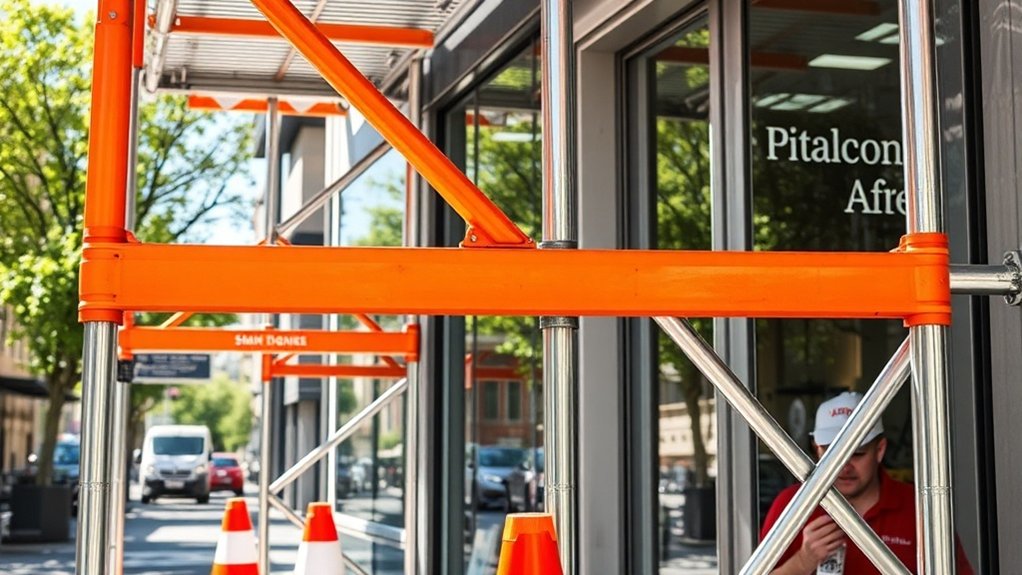
If your shop front in Merton is damaged, quick action is essential to prevent safety hazards and further deterioration. Look for signs like cracks, loose panels, or shattered glass that need urgent repairs. Contact a qualified, reputable repair service immediately to assess and secure the site. Prompt repairs minimize downtime and protect your business from liability. Staying prepared and understanding the repair process helps you respond effectively—continue on to learn more about safeguarding your shop front.
Takeaways
- Contact licensed emergency repair services with quick response times in Merton for urgent shop front damage.
- Assess signs like cracks, shattered glass, or loose panels to determine immediate repair needs.
- Secure the site promptly to prevent further damage or safety hazards for pedestrians.
- Document damages thoroughly with photos and reports for insurance claims and repairs.
- Implement weatherproofing and regular maintenance to minimize future risks and repair costs.
Understanding the Risks of Damaged Shop Fronts in Merton
A damaged shop front in Merton isn’t just an aesthetic issue—it’s a serious safety and security risk. Compromised shop front safety can lead to falling debris, endangering pedestrians and employees. Structural weaknesses may cause panels or glass to shatter unexpectedly, increasing liability and injury potential. Delaying repairs escalates the risk of vandalism or theft, as broken or unsecured elements invite intrusion. The repair urgency is clear: unresolved damage weakens overall stability, making the storefront vulnerable to further deterioration or accidents. Immediate action is essential to protect public safety, safeguard your business, and meet legal safety standards. Addressing damage promptly minimizes risks, avoiding costly emergencies and ensuring your shop front remains secure and compliant.
Signs Your Shop Front Needs Emergency Repairs
If you notice any cracks, loose panels, or shattered glass on your shop front, it’s a clear sign that emergency repairs are needed immediately. Structural damage compromises the safety of pedestrians and customers, risking injury and legal liability. Damaged panels or broken glass also negatively impact your shop front aesthetics, undermining your brand’s professionalism. Additionally, if your emergency signage is obscured or damaged, it reduces visibility and hinders emergency response efforts. Prompt action is essential to prevent further deterioration, protect public safety, and maintain a professional appearance. Ignoring these signs can lead to more extensive damage, higher repair costs, and potential closures. Act swiftly to address issues and guarantee your shop front remains secure, compliant, and visually appealing.
What Happens During an Emergency Shop Front Repair?
When an emergency repair is needed, the process begins immediately with a rapid assessment of the damage to determine the scope and urgency. You’ll need a swift, precise evaluation to prioritize safety and minimize downtime. The repair process then involves securing the site, removing hazardous debris, and implementing temporary supports if necessary. Ensuring shop safety is paramount throughout.
| Damage Type | Immediate Action | Priority Level | Repair Method | Duration |
|---|---|---|---|---|
| Structural | Stabilization | High | Reinforcement | Short |
| Glass | Shattering removal | Critical | Replacement | Short |
| Signage | Securing loose | Moderate | Repair/Replace | Medium |
| Frame | Cracks or breaks | High | Welding/Replacement | Short |
| External Damage | Cover or barricade | Critical | Temporary fix | Immediate |
How to Choose the Right Repair Service in Merton
Choosing the right repair service in Merton requires quick, informed decisions to guarantee safety and minimize downtime after an emergency shop front incident. Prioritize providers with verified repair qualifications to ascertain technical competency and adherence to safety standards. Verify their service reputation through reviews and references; a proven track record indicates reliability under pressure. Confirm they offer transparent estimates and rapid response times, vital during emergencies. Confirm the team is licensed and experienced in emergency repairs, and check for industry certifications. Avoid unverified or inexperienced contractors who may cause further damage or delays. A reputable, qualified service guarantees swift, safe, and effective repair, minimizing risk and downtime. - Verify repair qualifications - Check service reputation - Confirm licensing and certifications - Assess response times - Review client feedback
Tips to Minimize Downtime During Repairs
To minimize downtime during repairs, you need a solid emergency plan in place before work begins. Coordinate closely with repair teams to guarantee rapid response and efficient execution, and keep all stakeholders informed to prevent miscommunication. Acting swiftly and clearly is essential to limit operational disruptions.
Prepare an Emergency Plan
Having a detailed emergency plan in place is critical to minimize downtime during shop front repairs. An effective plan guarantees you respond swiftly, limiting disruption. Develop an emergency checklist outlining immediate actions, contact info, and safety protocols. Assemble a dedicated response team trained for rapid decision-making. Clearly define roles and responsibilities to prevent confusion. Establish communication channels for updates and coordination. Pre-arrange access points and safety measures to accelerate repairs. Regularly review and update your plan based on new risks or lessons learned. This proactive approach reduces delays, protects staff and customers, and maintains business continuity. Remember, a well-prepared emergency plan is your frontline defense against chaos during unforeseen shop front damage. Act now to safeguard your operations and reputation.
Coordinate With Repair Teams
Effective coordination with repair teams is essential to minimize shop front downtime. You must guarantee seamless communication, precise task allocation, and swift decision-making. Implement clear emergency response strategies, outlining roles and protocols for rapid action. Use a collaborative approach to synchronize efforts and avoid delays. Consider this quick reference:
| Step | Action | Priority |
|---|---|---|
| Assign a point person | Centralize communication | Critical |
| Share real-time updates | Use instant messaging or radios | High |
| Confirm resource availability | Confirm tools/materials are ready | Urgent |
| Review progress regularly | Adjust plans as needed | Immediate |
This structured coordination minimizes downtime, accelerates repairs, and guarantees operational continuity during emergencies.
Communicate Clearly With Stakeholders
Clear communication with stakeholders is essential to minimize downtime during repair emergencies. Effective stakeholder engagement guarantees everyone is informed and aligned, reducing delays and misunderstandings. You must deliver timely updates on repair progress, expected completion, and potential disruptions. Use direct channels like emails, texts, or phone calls for urgent alerts. Clearly outline what is affected, when, and how it impacts operations. Establish a point of contact for questions or concerns to streamline communication. Prioritize transparency; it builds trust and facilitates swift decision-making. Failure to communicate effectively can lead to confusion, extended downtime, and reputational damage. Maintain a concise, consistent information flow to keep stakeholders engaged and prepared for any adjustments needed during the repair process.
Costs and How to Handle Insurance Claims
Accurate cost estimation is critical to prevent budget overruns, so prioritize detailed assessments of repair needs upfront. Managing insurance claims efficiently requires swift documentation and understanding your policy coverage to avoid delays. Immediate action is essential—know your expenses and contact your insurer promptly to secure necessary funds.
Estimating Repair Expenses
- Obtain multiple detailed quotes
- Assess damage severity precisely
- Include all potential costs
- Prioritize urgent repairs
- Review insurance coverage limitations
Navigating Insurance Processes
Are you unsure how to navigate the insurance process after an emergency shop front repair? You must understand insurance terminology and claim documentation to avoid delays. First, promptly report damages, providing detailed claim documentation. Know your policy coverage limits and deductibles to estimate costs accurately. Communicate clearly with your insurer, referencing specific policy clauses. Prepare the following:
| Step | Action | Key Focus |
|---|---|---|
| 1 | Report damage | Claim documentation |
| 2 | Gather evidence | Photos, reports |
| 3 | Understand policy terms | Insurance terminology |
| 4 | Submit claim promptly | Timelines, forms |
| 5 | Follow up and negotiate | Cost management |
Mastering these steps guarantees swift reimbursement and minimizes repair costs.
Preventative Tips to Protect Your Shop Front in Merton
To minimize the risk of costly repairs, implementing proactive measures to safeguard your shop front in Merton is essential. Regular shop maintenance guarantees structural integrity and identifies vulnerabilities early. Prioritize weather protection by installing durable awnings, sealants, and impact-resistant glazing to withstand storms and extreme conditions. Promptly address any cracks or damages to prevent deterioration. Keep gutters and drainage clear to avoid water damage. Secure signage and external fixtures to prevent hazards during high winds. Additionally, inspect and reinforce the shop front regularly, especially after severe weather. Taking these steps reduces the likelihood of emergency repairs, saving costs and maintaining a professional appearance.
- Conduct routine shop maintenance and inspections
- Install weatherproof barriers and awnings
- Seal cracks and repair damages immediately
- Confirm gutters and drainage are clear and functional
- Secure external fixtures against strong winds
Frequently Asked Questions
How Quickly Can Emergency Repairs Be Completed?
Emergency repairs typically begin within a few hours of your call, depending on the severity and access. Our response time prioritizes urgent situations, ensuring swift action. We utilize advanced repair techniques, including temporary fixes and swift material application, to secure your shop front immediately. This minimizes downtime and prevents further damage. Rest assured, our team is dedicated to rapid, effective solutions, restoring safety and security as quickly as possible.
Are Emergency Repair Services Available Outside Regular Hours?
Yes, emergency repair services are available outside regular hours, ensuring you get urgent response whenever needed. After hours availability is a standard part of our service, allowing rapid intervention for shop front damages that can’t wait. We prioritize quick, effective solutions, minimizing downtime and preventing further damage. Contact us anytime for immediate assistance; our team is on standby for urgent repairs, day or night.
What Safety Precautions Are Taken During Repairs?
During repairs, safety precautions include strict use of safety gear like helmets, gloves, and eye protection to prevent injuries. A thorough risk assessment is conducted beforehand to identify hazards and implement appropriate control measures. Work areas are secured, and warning signs are posted to alert pedestrians and staff. Our priority is immediate safety, making certain all personnel follow protocols strictly to avoid accidents and guarantee a swift, secure repair process.
Can Temporary Fixes Prevent Further Damage?
Temporary fixes can greatly prevent further damage; studies show they can reduce repair costs by up to 30%. Immediate, well-executed temporary solutions are crucial in damage prevention, especially in urgent situations. They stabilize the structure and protect your property from weather or vandalism until permanent repairs are completed. Acting swiftly with effective temporary solutions minimizes risks, saving time and money, and guarantees safety during the repair process.
How Does Weather Affect Emergency Repair Scheduling?
Weather greatly influences emergency repair scheduling, especially during storm damage events and seasonal impacts. Severe storms or heavy rain can delay repairs, risking further damage or safety hazards. Cold temperatures may hinder material application, while high winds pose safety risks for workers. You must prioritize repairs promptly to prevent worsening conditions, but adapt schedules based on weather forecasts to guarantee safety and effectiveness. Immediate action minimizes damage and restores your shop’s security swiftly.