
Takeaways
- Conduct prompt damage assessments to identify cracks, chips, or shattered glass after a storm.
- Use temporary board-up solutions to secure damaged windows and prevent further harm.
- Choose experienced local repair services with good reputation for storm-related window repairs.
- Replace or repair glass with specialized tools, ensuring proper installation and safety protocols.
- Regular maintenance and inspections help detect vulnerabilities early, minimizing future storm damage risks.
What Causes Storm Damage to Windows in Southwark?
Storm damage to windows in Southwark is primarily caused by high-velocity impacts from severe weather phenomena such as strong winds, hail, and flying debris. Increased storm intensity amplifies the risk of such impacts, exerting greater force on window glass. The resilience of the glass plays a vital role in determining whether a window withstands or succumbs to these forces. During intense storms, the kinetic energy transferred by debris or hail can surpass the glass’s capacity to absorb impact, leading to fractures or shattering. Modern window designs incorporate enhanced resilience features, but extreme storm conditions can still compromise even the most durable glass. Consequently, understanding the relationship between storm intensity and glass resilience is essential for evaluating vulnerability and implementing appropriate protective measures.
How to Recognize When Your Windows Need Urgent Repair?
You should inspect your windows regularly for visible damage such as cracks, chips, or shattered glass, which compromise structural integrity. Unusual noises or drafts around the window frame may indicate hidden damage or seal failure. Promptly address these signs to prevent further deterioration or safety hazards.
Visible Damage Indicators
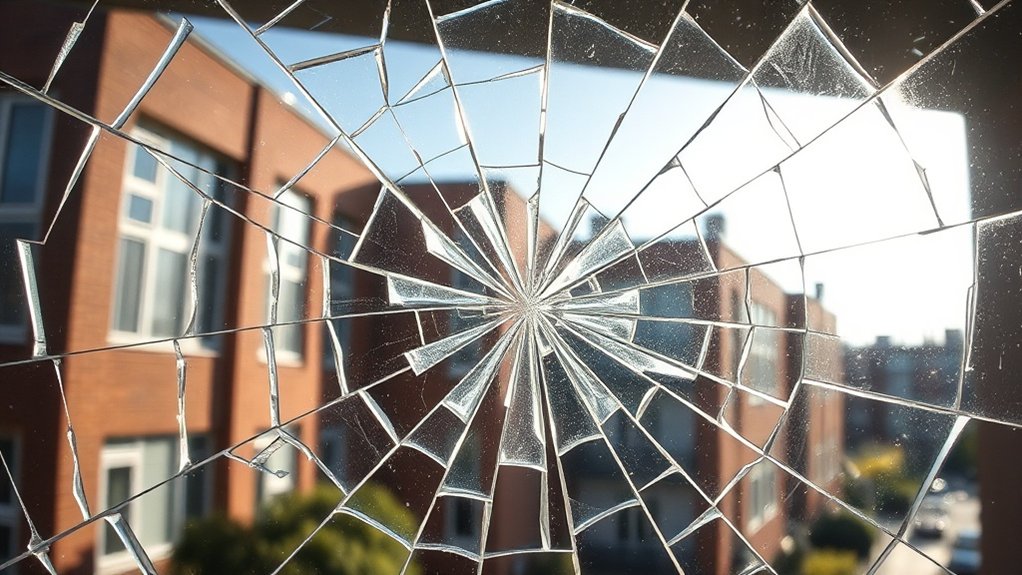
Visible damage indicators are critical signs that your windows may require urgent repair. Cracked glass is a primary visual cue, often appearing as spiderweb fractures or linear splits that compromise structural integrity. Shattered panes display extensive fragmentation, with glass fragments possibly falling inward or outward, indicating significant failure. These damages not only impair window function but also increase vulnerability to further storm-related impacts. Other visible signs include distorted or cloudy glass due to internal cracks or debris, and broken seals causing condensation buildup. Prompt identification of these indicators is essential to prevent further deterioration, security breaches, or injury. A thorough visual inspection should focus on the presence of cracked glass, shattered panes, and abnormal glass distortion, necessitating immediate professional assessment and repair.
Unusual Noise or Drafts
Unusual noises or drafts emanating from your windows are clear indicators that they may require urgent repair. Effective draft detection involves evaluating air leakage around the window frame, which often signals compromised seals or structural failure. During noise inspection, listen for whistling, rattling, or other abnormal sounds that suggest gaps or loose components. These issues can be caused by wind pressure or window warping, leading to decreased insulation and increased energy costs. Addressing these signs promptly prevents further damage and enhances security. If drafts persist despite adjustments, it indicates that the window’s integrity is compromised and immediate repair is necessary. Accurate draft detection and noise inspection are essential steps in diagnosing the urgency of window repairs following storm damage.
What Is the Storm Damage Window Repair Process?
The storm damage window repair process begins with evaluating the extent of the damage to determine the appropriate course of action. Temporary board-up solutions are implemented immediately to secure the property and prevent further harm. Once safety is established, the glass replacement procedure involves removing the damaged pane and installing a new, properly fitted glass unit.
Assessing Damage Extent
To accurately assess storm damage to a window, you need to systematically evaluate both the immediate and underlying structural integrity of the glass and framing. Begin with a damage assessment by inspecting for visible cracks, chips, or shattered areas, noting their size and location. Next, conduct a repair evaluation to determine if the glass can be salvaged or requires replacement. Examine the window frame for signs of warping, looseness, or corrosion, which could compromise stability. Check for glass misalignment or separation from the frame, indicating possible structural shifts. It’s vital to identify whether the damage affects the overall safety and functionality of the window. This detailed assessment guides the appropriate repair approach and guarantees long-term durability.
Temporary Board-Up Solutions
Once the damage assessment confirms significant glass breakage or structural compromise, implementing a temporary board-up is an essential step to protect your property. This process involves applying secure, weather-resistant coverings over damaged windows to prevent further intrusion or deterioration. Temporary solutions are typically installed swiftly by emergency services to mitigate risks. Visualize the following actions:
- Securing plywood or heavy-duty boarding material over window openings
- Ensuring airtight seals to prevent water ingress and debris entry
- Using fasteners to maintain stability against wind and weather conditions
These measures serve as immediate, effective barriers while scheduling permanent repairs. Proper temporary board-up preserves the structural integrity of your property, reduces security vulnerabilities, and minimizes potential damage until thorough glass repairs can be completed.
Glass Replacement Procedure
When restoring damaged windows after a storm, the glass replacement process involves several carefully executed steps to secure safety, durability, and proper functionality. Initially, a thorough assessment determines the appropriate glass types—such as tempered, laminated, or insulated glass—based on the window’s purpose and structural requirements. Removal of the broken or compromised glass is performed using specialized tools, guaranteeing minimal damage to the frame. Next, installation techniques are applied to secure the new pane, including sealing with high-quality glazing compounds or weatherstripping to prevent leaks and drafts. Precise measurements guarantee proper fit and alignment. Proper handling and installation of the glass types are critical to restore the window’s integrity, safety, and functionality, ultimately prolonging its lifespan and resilience against future storm damage.
Choosing the Right Storm Damage Glass Repair Service
Selecting the appropriate storm damage glass repair service requires careful evaluation of several key factors. First, assess their service reputation by reviewing customer feedback and industry credentials to guarantee reliability. Second, request detailed cost estimates to compare pricing transparently and avoid hidden charges. Third, verify their expertise in handling storm-related damages, including experience with specific window types and damage severity. A reputable provider will offer clear communication, timely service, and quality workmanship. Consider companies with proven track records in Southwark, backed by positive reviews and certifications. Prioritizing these factors helps secure a service that is both cost-effective and dependable, safeguarding your property’s safety and restoring your windows efficiently.
Tips to Protect Your Windows From Future Storms
To effectively reduce the risk of storm-related window damage, implementing proactive protective measures is vital. Employing window protection strategies such as installing storm shutters, impact-resistant glass, or film can dramatically enhance durability. Using storm-resistant materials, like laminated or tempered glass, provides increased resilience against high winds and debris. Reinforcing window frames with corrosion-resistant materials guarantees structural integrity during severe weather. Proper sealing with weatherstripping prevents water intrusion and wind infiltration. Additionally, regular maintenance, including inspection for cracks or weaknesses, guarantees peak performance of protective elements. Combining these strategies creates a thorough barrier that minimizes damage potential. By integrating storm-resistant materials and targeted window protection strategies, you can effectively safeguard your property from future storm-related impacts.
What to Expect During Storm Damage Window Repairs
Following the implementation of storm-resistant measures, understanding what occurs during storm damage window repairs can help you better anticipate the process. Initially, a thorough assessment identifies the extent of damage, ensuring proper storm preparation and targeted repairs. During repair, technicians remove broken glass and damaged framing, isolating compromised components to prevent further deterioration. They then replace or reinforce the window structure, utilizing specialized tools for precise installation. You may notice temporary protective coverings to prevent debris intrusion. Throughout, the focus remains on restoring window integrity and optimizing window maintenance for future storms. - Damage assessment and safety protocol implementation - Removal of shattered glass and damaged framing - Precise installation and sealing to restore durability
Frequently Asked Questions
How Long Does Storm Damage Glass Repair Typically Take?
Storm damage glass repair typically takes a few hours to a day, depending on the extent of the damage, glass types, and repair techniques used. For minor cracks, repairs may be quick, involving specialized bonding agents. Larger or more complex damage may require glass replacement, which can extend the process. Accurate assessment guarantees the right repair techniques are applied, minimizing downtime and restoring structural integrity efficiently.
Are There Any Warranties on Storm Damage Window Repairs?
Yes, there are warranty details on storm damage window repairs. Most reputable repair services in Southwark offer repair guarantees that typically cover workmanship and materials for a specified period, often ranging from one to five years. It’s important to review the warranty details provided at the time of service, ensuring clarity on coverage scope, limitations, and whether any conditions apply to maintain warranty validity.
Can Storm Damage Glass Be Repaired or Does It Need Replacement?
Storm damage glass can often be repaired, especially with advanced techniques like epoxy injections or glass bonding, depending on the extent of the damage. If your window has tempered or laminated glass, specialized repair techniques might restore its integrity. However, severe cracks or shattered panes typically require full replacement to guarantee safety and durability. Evaluating the damage thoroughly helps determine the best repair technique or whether a full replacement is necessary.
What Are the Costs Associated With Storm Damage Window Repairs?
The costs for storm damage window repairs vary depending on repair techniques and cost factors like glass type, extent of damage, and frame condition. Typically, repairs involve techniques such as glass patching or sealing, which are less expensive than full replacements. Factors influencing costs include labor, materials, and the complexity of the damage, with prices generally ranging from £100 to £500 for minor repairs and up to several thousand for extensive damage.
Does Insurance Cover Storm Damage Glass Repair Costs?
Insurance policies often cover storm damage glass repairs, but coverage limits and policy specifics vary. You might find that some policies include extensive coverage, which can handle such repairs, while others exclude storm-related damages. It’s essential to review your policy details carefully to understand what’s covered and what’s not. Contact your insurer promptly to confirm coverage, as many policies have specific clauses and limits regarding storm-related damages.