
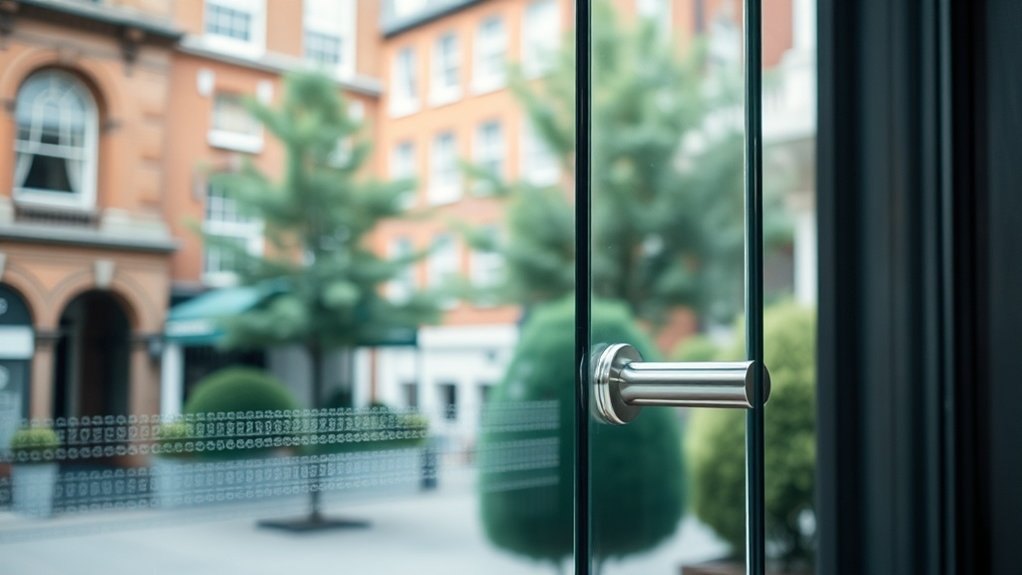
In Kensington and Chelsea, emergency safety glass is vital for protecting both people and property, adhering to strict safety standards like BS EN 12600 and BS 6206. This specialized glass, such as tempered or laminated varieties, reduces injury risk from breakage and enhances security. Proper selection, installation, and regular inspection are essential to guarantee ongoing safety and compliance. To understand how to optimize your safety measures, explore further details below.
Takeaways
- Emergency safety glass, such as tempered and laminated types, prevents injuries and property damage in Kensington and Chelsea.
- Compliance with UK standards (BS EN 12600, BS 6206) is essential for safe installation and legal adherence.
- Proper installation requires skilled assessment, precise measurement, and secure sealing for maximum safety.
- Regular inspections and maintenance ensure ongoing safety and early detection of damage or wear.
- Local regulations may impose additional fire safety and security requirements for emergency safety glass.
What Is Emergency Safety Glass and Why Is It Important in Kensington and Chelsea?
Emergency safety glass is a specialized form of glass designed to prevent injury and property damage in the event of breakage or impact. It includes various glass types, such as tempered and laminated glass, each engineered for specific safety applications. Tempered glass is heat-treated to shatter into small, blunt pieces, reducing injury risk, while laminated glass consists of layers of polyvinyl butyral (PVB) between glass panes, holding shards together upon breakage. The installation benefits of emergency safety glass are significant; it enhances building safety, guarantees compliance with safety standards, and minimizes liability. Properly installed safety glass can absorb impact energy, preventing dangerous shards from causing harm. In Kensington and Chelsea, this glass type is essential for safeguarding residents and property against accidents or vandalism.
What Regulations and Standards Do I Need to Know?
Understanding the regulatory landscape for safety glass in Kensington and Chelsea is vital to guarantee compliance and safety. Building codes specify requirements for the installation, performance, and safety standards that emergency safety glass must meet. These regulations ensure that the glass resists impact and minimizes injury risks during breakage. Compliance involves adhering to standards such as BS EN 12600 and BS 6206, which define testing methods and classification for safety glass. Local building regulations may also impose specific requirements related to fire safety and security. It’s essential to verify that the safety glass you choose aligns with these standards and codes to avoid penalties or safety hazards. Staying informed about updates to building codes and safety standards helps ensure your property remains compliant and secure.
How Do I Choose the Right Emergency Safety Glass for My Property?
Selecting the appropriate safety glass for your property requires careful consideration of several factors, including the specific risks present, the location of installation, and compliance with relevant standards. Your choice of glass types—such as laminated or toughened glass—impacts safety and durability. Additionally, installation costs vary depending on glass complexity and structural requirements. To assist, consider this comparison:
| Glass Type | Benefits | Typical Costs |
|---|---|---|
| Laminated Glass | High impact resistance, safety | Higher |
| Toughened Glass | Rapid breakage into small pieces | Moderate |
| Insulated Glass | Thermal efficiency, safety | Varies |
Assess risks, standards, and budget constraints to determine the best choice for your property.
What Can I Expect During Emergency Safety Glass Installation?
What can you anticipate during the installation of emergency safety glass is a process that typically involves careful planning and skilled execution. The installation process begins with a detailed assessment to determine the appropriate glass types and frame modifications. Key stages include:
- Precise measurement and removal of damaged or existing glass, ensuring minimal structural disruption.
- Installation of the new safety glass, whether laminated or toughened, with secure sealing to prevent future vulnerabilities.
- Final inspection to verify proper fit, adhesion, and compliance with safety standards.
Throughout, adjustments are made to accommodate specific glass types and architectural requirements. Expect a methodical, safety-focused approach that prioritizes durability, integrity, and compliance with local safety regulations.
How Can I Maintain and Inspect My Safety Glass Over Time?
Proper maintenance and regular inspection of your safety glass are essential to guarantee its ongoing performance and safety integrity. To assure effective glass care, perform routine checks for signs of damage, such as cracks, chips, or delamination. Visual inspections should be conducted monthly, focusing on edges and surface integrity, as these areas are most vulnerable. Clean the glass with non-abrasive, pH-neutral cleaners to avoid surface deterioration. Document any issues immediately and consult a qualified professional for repairs or replacements. Avoid applying excessive force or pressure during inspections, as this can compromise the glass’s structural integrity. Implementing a strict schedule of routine checks and proper cleaning assures that your safety glass remains compliant with safety standards and maintains peak performance over time.
Frequently Asked Questions
How Quickly Can Emergency Safety Glass Be Installed After a Break?
In the age of dial-up, quick responses mattered, and today, emergency safety glass can be installed within 24 hours after a break. Glass replacement timeframes depend on the extent of damage, but emergency glass options are designed for rapid deployment. Skilled technicians prioritize safety and efficiency, ensuring minimal disruption. You’ll generally find that urgent installations are completed swiftly, often within the same day or next, to restore security effectively.
Are There Specific Brands of Safety Glass Recommended for Kensington and Chelsea?
You should choose safety glass brands known for quality and compliance with local safety standards. Reputable local suppliers in Kensington and Chelsea often recommend brands like Pilkington, Saint-Gobain, or AGC, which meet British safety regulations. These brands are tested for durability and safety, making them suitable for emergency applications. Always verify with suppliers that the chosen safety glass complies with UK building codes and specific project requirements.
What Is the Typical Lifespan of Emergency Safety Glass in Residential Properties?
The typical lifespan of emergency safety glass in residential properties is around 5 to 10 years, but its glass durability can vary based on factors like exposure to elements and maintenance. Since safety is paramount, it’s crucial to regularly inspect and replace compromised panels to guarantee ongoing residential safety. Keep in mind, a stitch in time saves nine; timely replacements help maintain the integrity of your safety glass.
Can Emergency Safety Glass Be Customized to Match Existing Window Designs?
Yes, emergency safety glass can be customized to match existing window designs through various options. You can select from a range of custom design options, including specific glass texture variations that align with your aesthetic preferences. These customizations guarantee the safety glass integrates seamlessly with your property's architecture, maintaining visual consistency while providing the required safety standards. Consult with your supplier to explore tailored solutions that suit your unique window specifications.
What Is the Cost Range for Emergency Safety Glass Installation in My Area?
The cost of emergency safety glass installation in your area typically ranges from £100 to £300 per window, depending on the glass type and size. Glass installation prices vary based on the emergency glass types selected, such as laminated or toughened glass. Factors affecting costs include complexity, frame adjustments, and urgency. For precise estimates, consult local specialists to guarantee compliance with safety standards and tailored solutions.